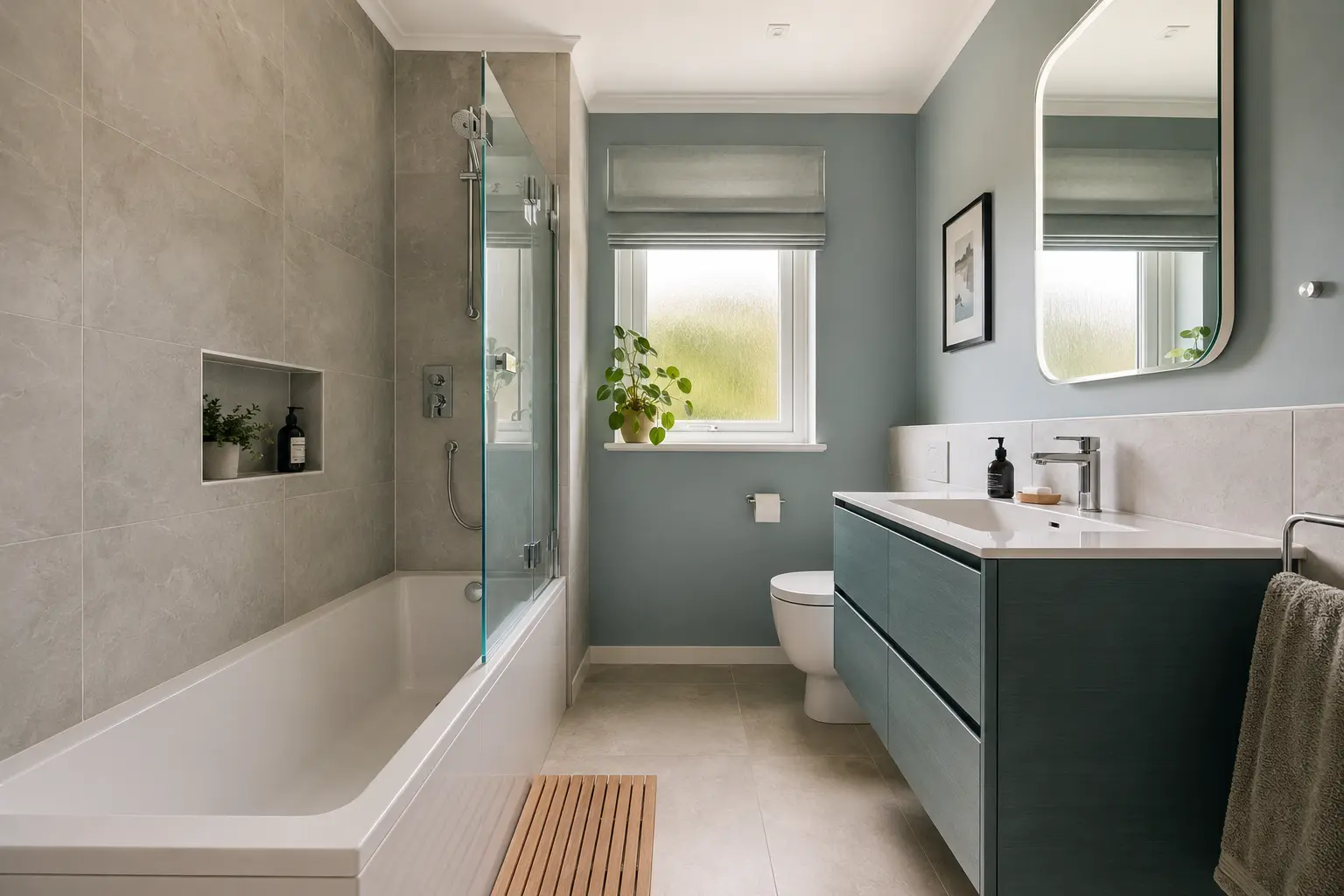
Appearance and design choice
Tiles offer many formats, patterns and layout options. Grout colour and joint position become an important part of the finished design.
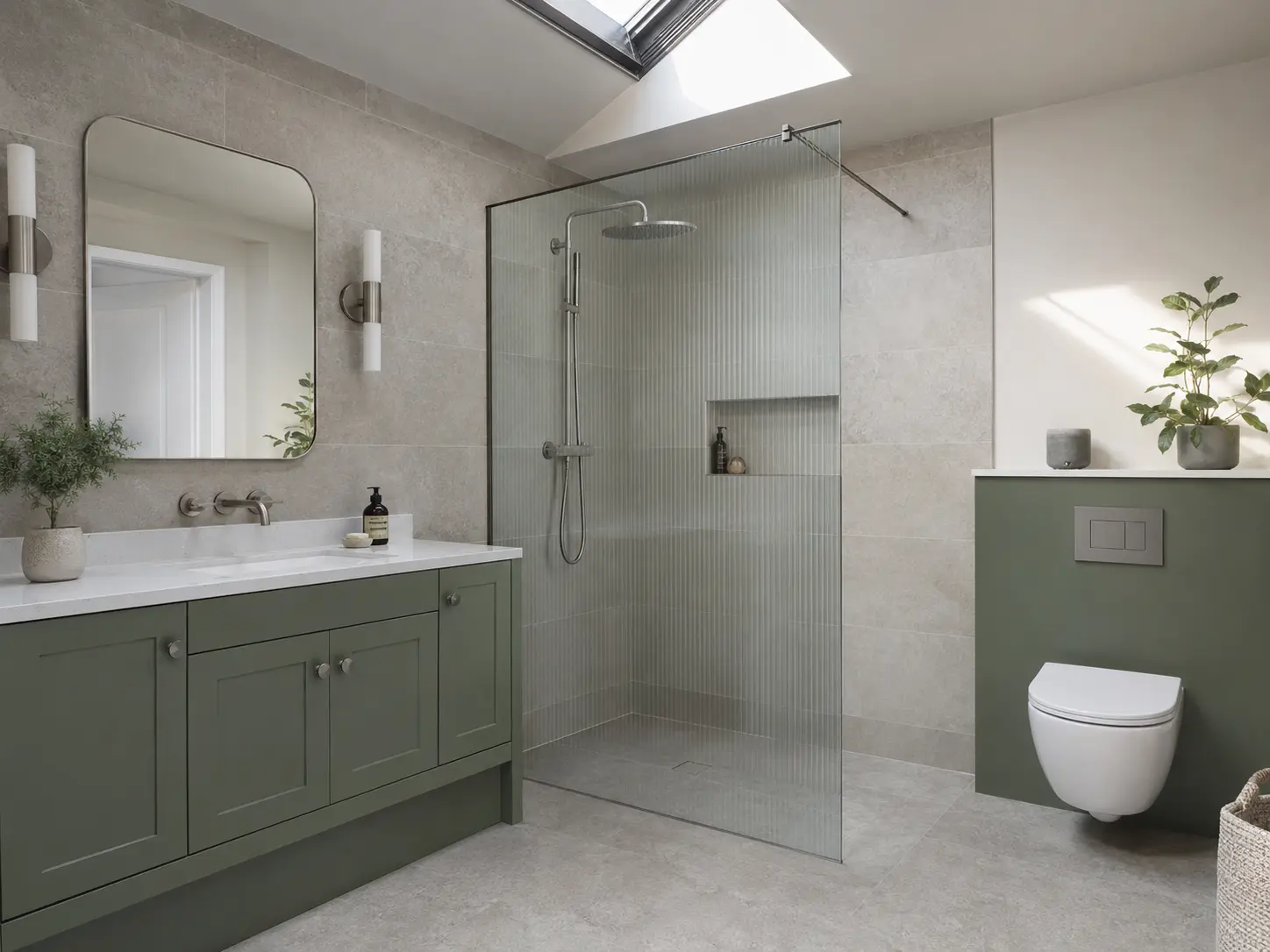
Wet wall panels create larger uninterrupted areas with fewer visible joints. Stone and marble effects can feel calm when panels are matched and positioned carefully.
To discuss changes to your own bathroom, read about wet wall bathroom fitting in Cumbernauld.
Cleaning and maintenance
Panels have fewer grout lines, which many homeowners find easier to wipe down. Joints and sealant still need regular inspection and sensible cleaning products.
Tiled surfaces are durable, but grout may need more attention in wet or poorly ventilated rooms. Good extraction helps both finishes dry properly.
- Use non-abrasive cleaners
- Ventilate after bathing
- Inspect sealant and joints
- Repair damage promptly
Discuss Your Bathroom Plans
Tell us your postcode and what you want to change.
Call 07700 175069 Send an enquiry →Installation and preparation
Neither finish should be used to hide an unsuitable wall. The wall or floor underneath must be stable, appropriately prepared and waterproofed where the system requires it.
Panels can cover a large area quickly, but accurate cutting around windows and fittings is essential. Tiles take longer to set out and install, especially with complex patterns or many edges.
Repairs and future changes
A damaged tile can sometimes be replaced individually if a matching spare is available. Replacing a panel may involve a larger section and carefully releasing adjacent joints.
Keep spare tiles or record the panel range after installation. Product lines change, so a small amount of planning can make future maintenance easier.
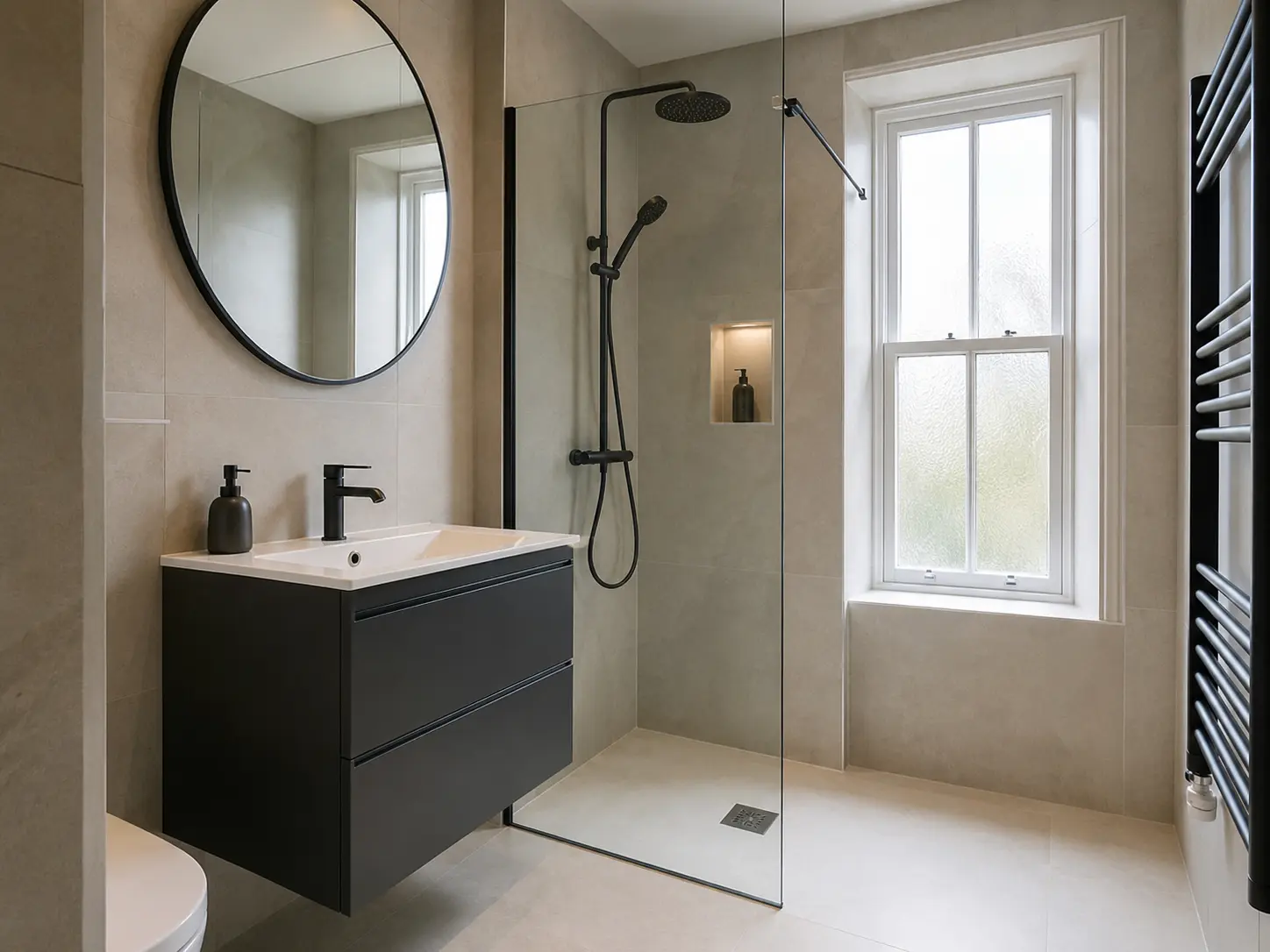
Compare the finish around windows and corners
Bathrooms are rarely made up of plain rectangular walls alone. A window recess, sloping ceiling or boxed pipe can add cuts and joints to either finish. Ask how those edges will be covered and sealed. Seeing a sample trim beside the panel or tile helps you judge the complete appearance.
For patterned panels, ask where the pattern will meet across joints. For tiles, ask how the layout will avoid narrow strips in obvious places. The installer should measure before final quantities are agreed. A decision based only on the surface price may miss these fitting details and the work they require.
Think about what happens if you add something later
A future shelf, rail or shower screen may need fixings through the finished surface. Check how that work should be done and whether support is needed behind it. Neither a panel nor a tile should be assumed to provide all the strength required for a heavy fitting.
If a shower valve or pipe needs repair, the location of access panels matters more than the decorative finish. Discuss this while the room is being planned. Keep the panel or tile name and colour code, along with spare pieces where practical, so a repair can be matched more easily.
Look at cleaning instructions before buying
Easy to clean does not mean any cleaner is suitable. Some products can damage coatings, joints or trims. Ask for the care instructions for the exact panel or tile range and for the grout or sealant used with it. Check whether your usual cleaning products are suitable before using them.
Consider how much texture you want inside the shower. A heavily textured surface may need more attention than a smoother one. Light and dark colours show marks differently, so look at a real sample rather than only a photograph. Choose a finish you are happy to care for, not just one that looks good when completely dry.
Ask for two complete installed options
If you cannot decide, request one quote for your preferred panels and another for the tiled version of the same room. Keep the layout and products otherwise the same. Each should include preparation, the right fitting materials, trims, joints and finishing around the shower or bath.
Compare what changes as well as the total. Panels may reduce the number of grout lines, while tiles may offer the pattern you want. Neither option removes the need for sound preparation or good ventilation. Choose with the full job in view, including cleaning and future repair, so the decision fits how you will use the bathroom.
Ask what spare material is sensible to keep and where it can be stored. A record of the exact colour and range is useful even when you cannot keep a full spare panel. Think about how long you expect to keep the finish and which changes might happen later. If you plan to add a rail or replace a shower screen, tell the installer now. They can explain what should be prepared behind the surface. Keep the approved fixing and sealing advice with the product records. That gives a future installer a useful starting point without having to guess which wall system was fitted.