Protection and removal
The team should protect access routes and agree how waste and deliveries will be managed. Water and electrical supplies are made safe before the old suite and finishes are removed.
Opening the room can reveal the true condition of services and surfaces. Any change to the agreed work should be explained before extra work begins.
To discuss changes to your own bathroom, read about bathroom installation in Cumbernauld.
Pipework and room preparation
Pipework, drainage, electrical cables and ventilation are positioned before walls and floors are closed. Accurate pipe and cable positions ensure the chosen furniture and shower equipment fit correctly later.
Walls and floors are repaired, levelled or strengthened as required. Wet areas receive a suitable waterproofing approach before decorative finishes are installed.
- Plumbing and drainage
- Electrical and extraction routes
- Floor and wall preparation
- Waterproofing in wet zones

Discuss Your Bathroom Plans
Tell us your postcode and what you want to change.
Call 07700 175069 Send an enquiry →Surfaces, furniture and fittings
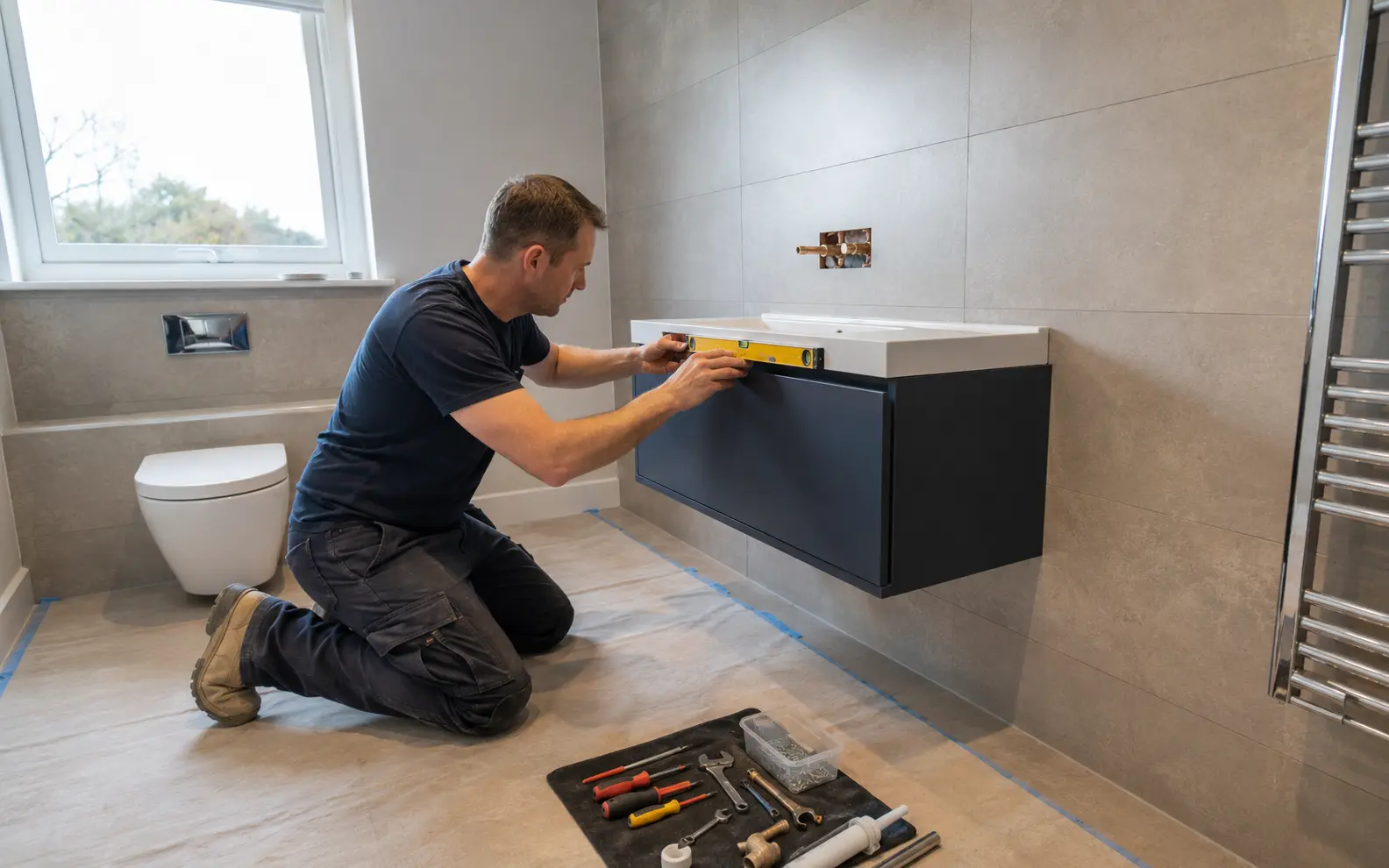
Panels, tiles and flooring are set out to avoid awkward cuts and untidy joints. Furniture, baths, basins, toilets and shower fittings are then installed against the prepared surfaces.
The correct order protects finished work and keeps important service access available. Sealants and adhesives also need the drying time recommended by the manufacturer.
Testing and final checks
Water supplies, drainage, controls, extraction and electrical items should be checked. Doors, drawers, screens and fittings are adjusted before the room is cleaned.
During the final checks, ask how to operate and care for the main products. You should also know where water shut-off valves are and who to contact if a concern appears.

Know what to expect on the first day
Agree where the team will enter, where tools can be kept and which route will be used to remove the old suite. Clear personal belongings before they arrive. If you live in a flat, explain any shared access arrangements that affect deliveries or carrying materials through the building. These details help avoid disruption outside the bathroom.
Ask when the water may be switched off and which fittings will be unavailable. The answer can change as the work progresses, so agree who will update you. Do not assume that a toilet or tap which is still in the room is connected and safe to use. Check with the team before entering or using an unfinished area.
Understand the work that happens behind the finishes
Before the new walls are covered, the pipes and cables need to reach the right positions for your chosen fittings. A basin tap mounted on the wall needs different preparation from one mounted on the basin. The same is true of concealed shower controls. Confirm these choices early so the installer can prepare for the actual products.
Access for maintenance also needs planning at this stage. Ask how a valve, cistern or shower part can be reached later. A removable panel or accessible fitting may save damage during a future repair. Keep photographs or notes supplied by the installer with the product details, especially where important parts will be hidden.
Avoid changing products halfway through
A different vanity may look like a small change, but its basin height, depth and pipe openings can affect work already completed. A different tile size can change the layout around windows and shelves. If you want to change something, ask about the effect on cost and timing before buying it.
When a delivery arrives, check that it is the agreed product and report visible damage promptly through the agreed contact. Keep packaging and instructions until the installer confirms what is needed. Do not unpack heavy glass or move large fittings alone to inspect them. Arrange the delivery checks with the people responsible for supply and fitting.
Walk through the finished bathroom together
Try the taps, flush, shower controls and cabinet doors with the fitter present. Ask how to clean each surface and when the shower can first be used. Some sealants and adhesives need time even after the visible fitting work is complete. Follow the instructions for the products used in your room.
Write down anything still outstanding and the agreed next step. Ask who to contact if a leak, loose fitting or other issue appears. Keep the product names, care instructions and relevant certificates in one folder. You do not need to remember every explanation on the day if you have clear information to refer to afterwards.
Before the team leaves, check that you know where any access panels and water shut-off controls are. Ask which checks you can safely make yourself if something seems wrong and which require a call. Do not dismantle a new fitting to investigate it. A clear description, the product details and a photograph of the visible problem are usually more useful when arranging follow-up help.