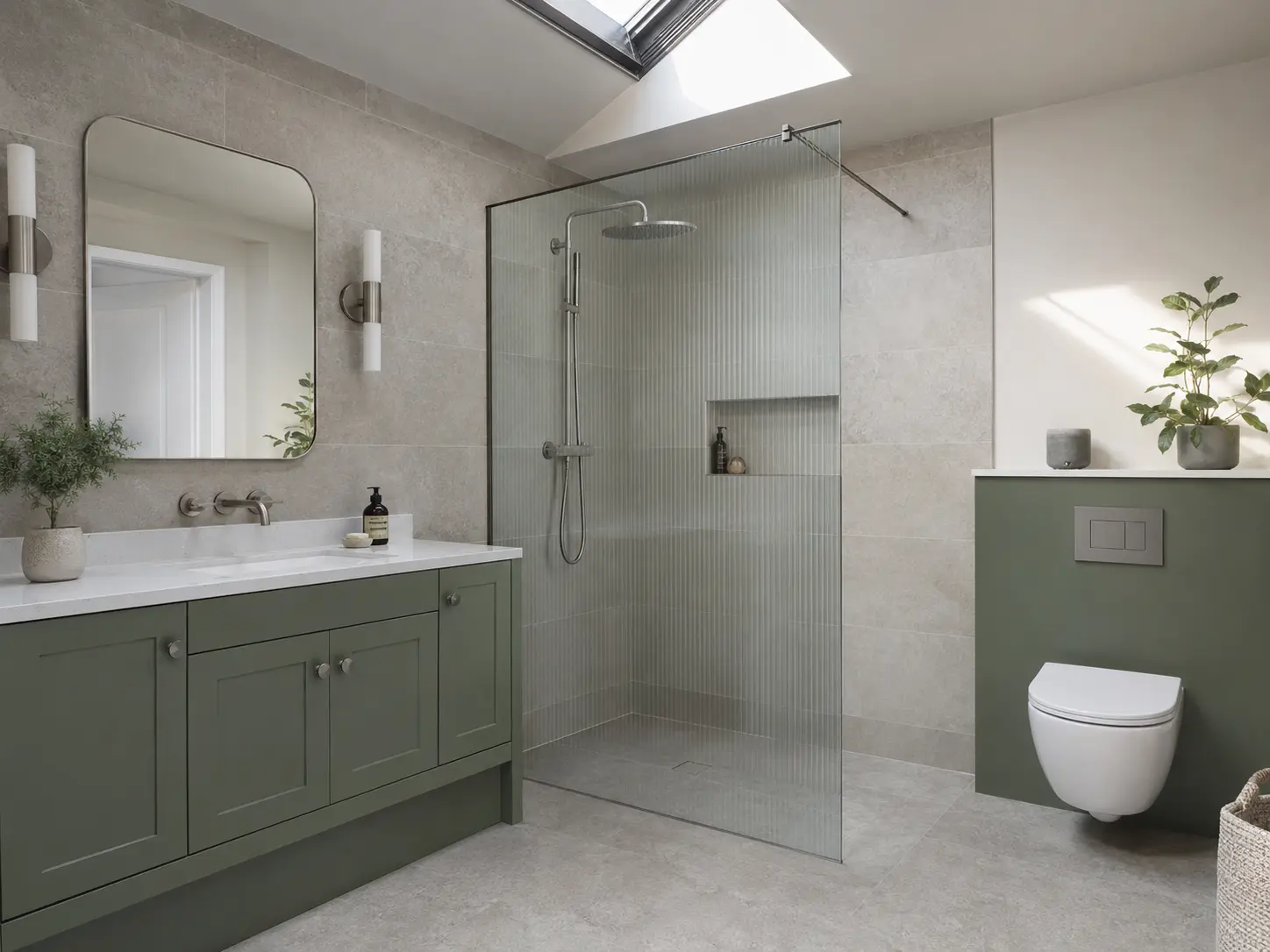
Why opening a window may not be enough
A window can help, but it depends on weather, security and someone remembering to use it. Cold outdoor air can also make the room uncomfortable during winter.
Mechanical extraction provides a consistent route for moist air. It is particularly important in internal bathrooms and rooms used by several people.
To discuss changes to your own bathroom, read about planning a bathroom renovation in Cumbernauld.
How extractor fans are controlled
Fans may operate with the light, a timer, a humidity sensor or a separate control. The best choice depends on household habits and how long moisture remains after bathing.
An overrun timer lets extraction continue after someone leaves. Humidity control can help when showers are used without the main light.
- Light-linked control
- Overrun timer
- Humidity sensor
- Continuous low-rate ventilation

Discuss Your Bathroom Plans
Tell us your postcode and what you want to change.
Call 07700 175069 Send an enquiry →Ducting and replacement air matter
Long, crushed or poorly routed ducting reduces airflow. Condensation within an unsuitable duct can also create noise or staining elsewhere.
Air must be able to enter the bathroom as the fan removes it. A correctly sized door gap or another designed air path helps the system work.
Signs ventilation needs attention
Persistent condensation, peeling paint, mould and damp towels can suggest the room is not drying. The cause may be fan performance, heating, air supply or the way the room is used.
Bathroom electrical zones and building requirements affect installation. Ask a suitable professional to assess upgrades rather than choosing a fan by appearance alone.
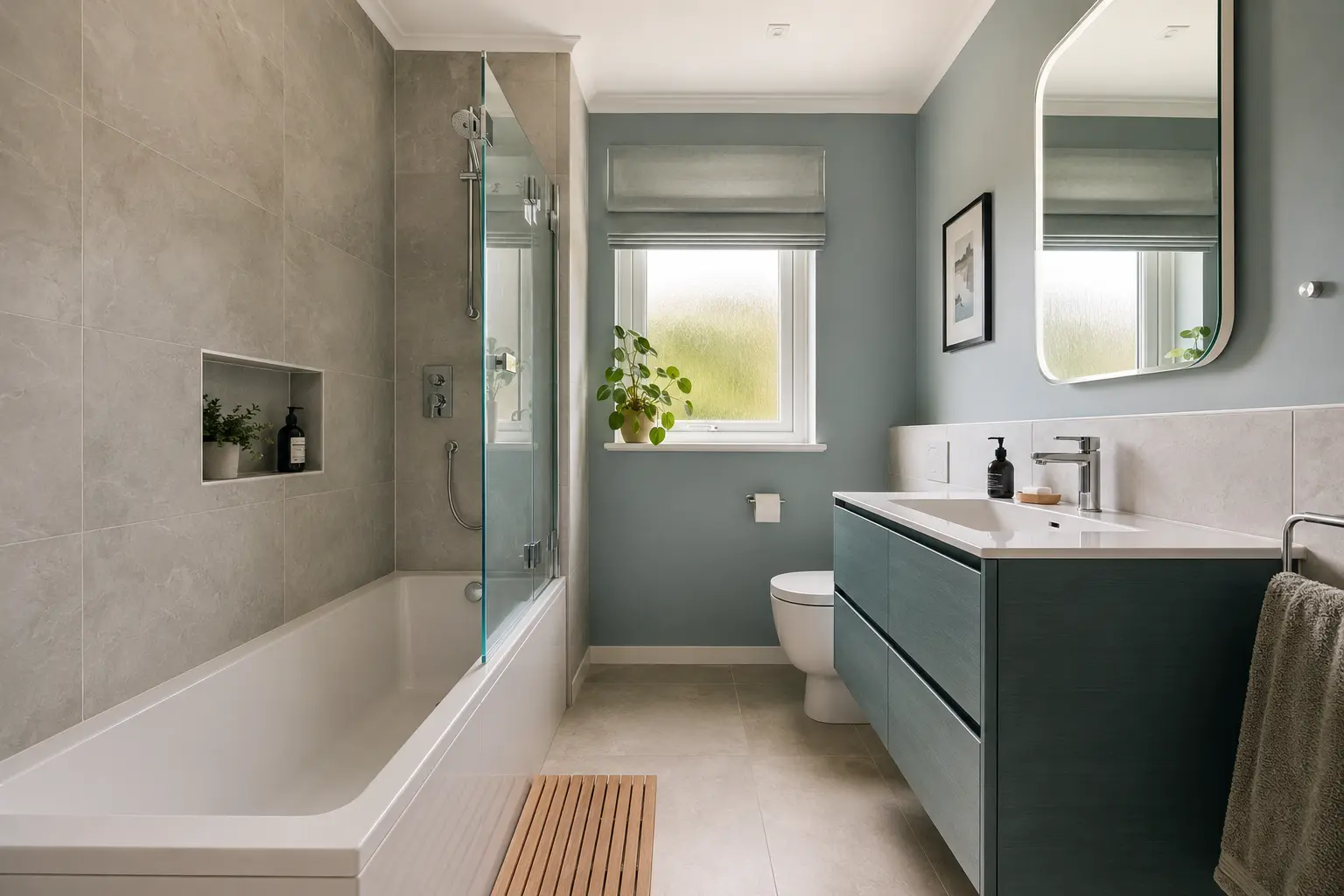
Describe how the bathroom is used
Tell the person checking ventilation how many showers are taken close together and whether the room has an opening window. Mention damp towels, lingering steam and any recurring marks. The fan has to suit the room’s use, not simply fit the hole left by the old one.
Explain if noise is the reason the fan is switched off. A control that is inconvenient or poorly understood can also lead to inconsistent use. Ask for the proposed controls to be explained in ordinary terms: what turns the fan on, how long it continues and whether there is anything the household needs to do.
Ask where the extracted air goes
A fan needs a suitable route to remove moist air from the building. During a survey, ask where the duct runs and whether it is being kept or replaced. The visible grille inside the bathroom is only one part of the system. A replacement fan alone may not address a problem elsewhere along the route.
If the duct passes through a ceiling or another part of the home, ask what access and finishing work may be needed. Put that in the quote. The person doing the work should check the route and relevant requirements, rather than relying only on the old fan’s size or appearance.
Keep ordinary maintenance practical
Find the cleaning instructions for the fitted fan and keep them with the bathroom paperwork. Clean only the parts the instructions allow you to reach safely. Do not remove electrical covers, put tools into a running fan or climb somewhere unsafe to reach an outside grille.
If the sound changes, the fan stops or steam lingers much longer than before, report it with the model details if available. Note whether the problem occurs every time or only under certain conditions. This gives the person arranging a check more useful information than simply saying the bathroom feels damp.
Include ventilation when choosing the new layout
A new shower position, cabinet or ceiling finish can affect space for a fan and duct. Discuss these together before products are ordered. The mirror lighting and shower controls are easy to notice in a design, but the room also needs a practical way to remove the moisture bathing creates.
Ask how the finished system will be checked and how its controls will be demonstrated. Keep any relevant instructions and documents after installation. You should know what normal operation sounds like and how long the fan is expected to run, so you can recognise a change later.
If condensation continues after an upgrade, do not assume another, larger fan is automatically the answer. Heating, the air route and possible leaks may also need checking. Explain the pattern of damp and the work already done so the next assessment starts with the full picture.
Keep the fan grille clear of towels, furniture and decorative covers that were not designed for it. If a new cabinet is being fitted near the fan, check the arrangement with the installer first. Leave the controls and any maintenance access reachable. Ventilation needs to remain usable after shelves, mirrors and other everyday bathroom items have been put in place.
Sources and further reading
Checked 11 October 2026. These resources give further information.