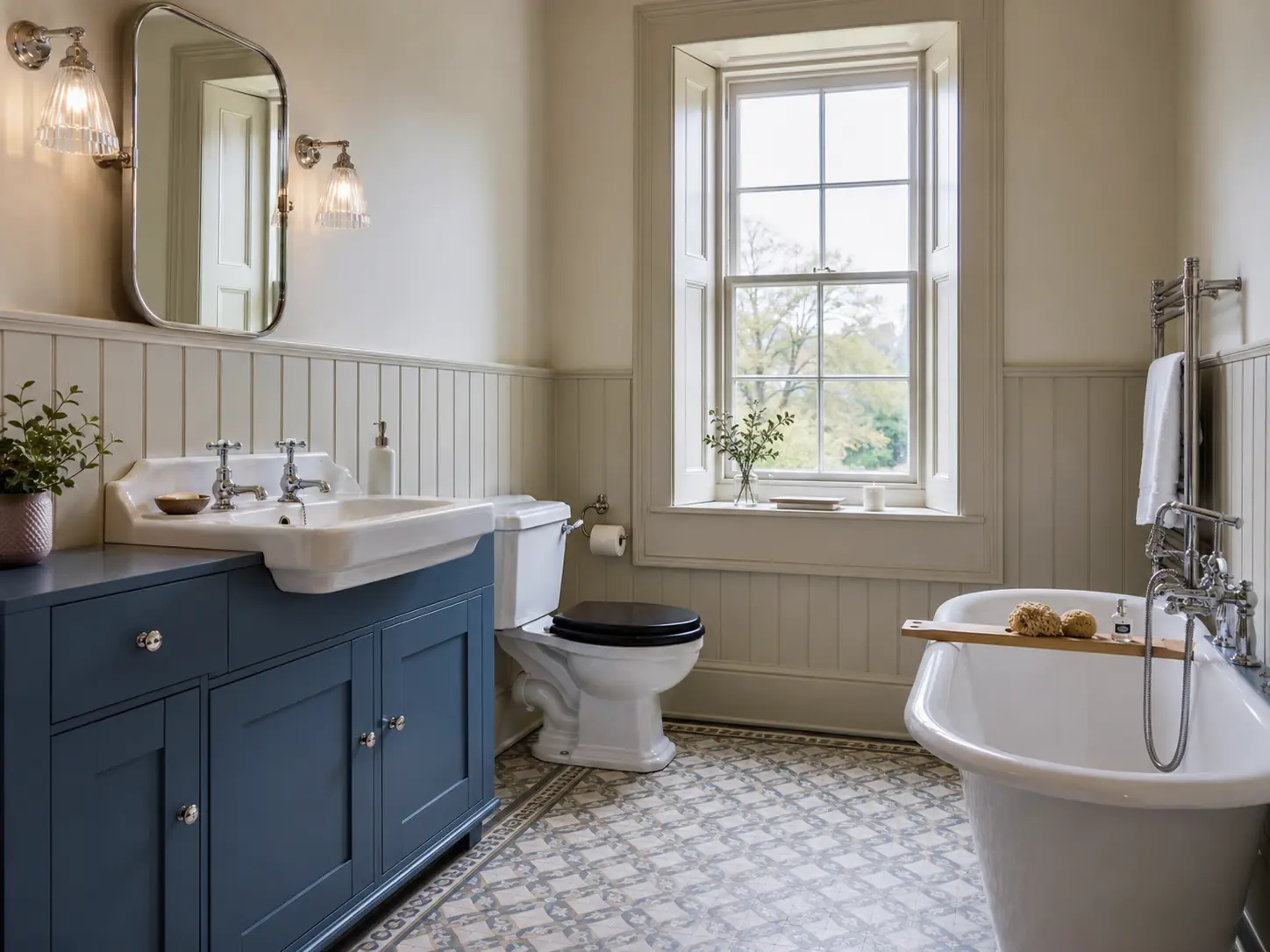
Control moisture at its source
Use the extractor during bathing and leave it running for the extra running time set on its timer. Keep the bathroom door closed while steam is highest so moisture does not spread through the home.
Wipe heavy water from screens and very wet surfaces. Hang towels where air can move around them rather than leaving them folded in a damp room.
To discuss changes to your own bathroom, read about bathroom renovation work in Cumbernauld.
Make sure extraction works properly
An extractor needs to suit the room, have a suitable duct to the outside and allow fresh air into the bathroom. A fan can sound active while moving little air through a long or restricted duct.
Clean accessible covers as recommended and check outside grilles are not blocked. Electrical work and fan replacement should be handled by a suitable professional.
- Use the fan every time
- Keep grilles clear
- Allow air into the room
- Investigate persistent condensation

Discuss Your Bathroom Plans
Tell us your postcode and what you want to change.
Call 07700 175069 Send an enquiry →Keep the room reasonably warm
Cold walls and windows attract condensation. Steady background warmth can help surfaces dry more effectively than a short burst of heat after bathing.
Use the heated towel rail for drying only as designed and avoid covering room heating completely. The heating plan should suit the room size and level of insulation.
Deal with the cause, not only the stain
Small surface patches can often be cleaned with a suitable product while following its safety directions. Repeated growth may point to weak extraction, leaks, failed sealant or a colder hidden area.
If mould is extensive, returns quickly or appears with damaged surfaces, seek appropriate advice. A bathroom renovation should correct moisture management rather than simply cover the evidence.
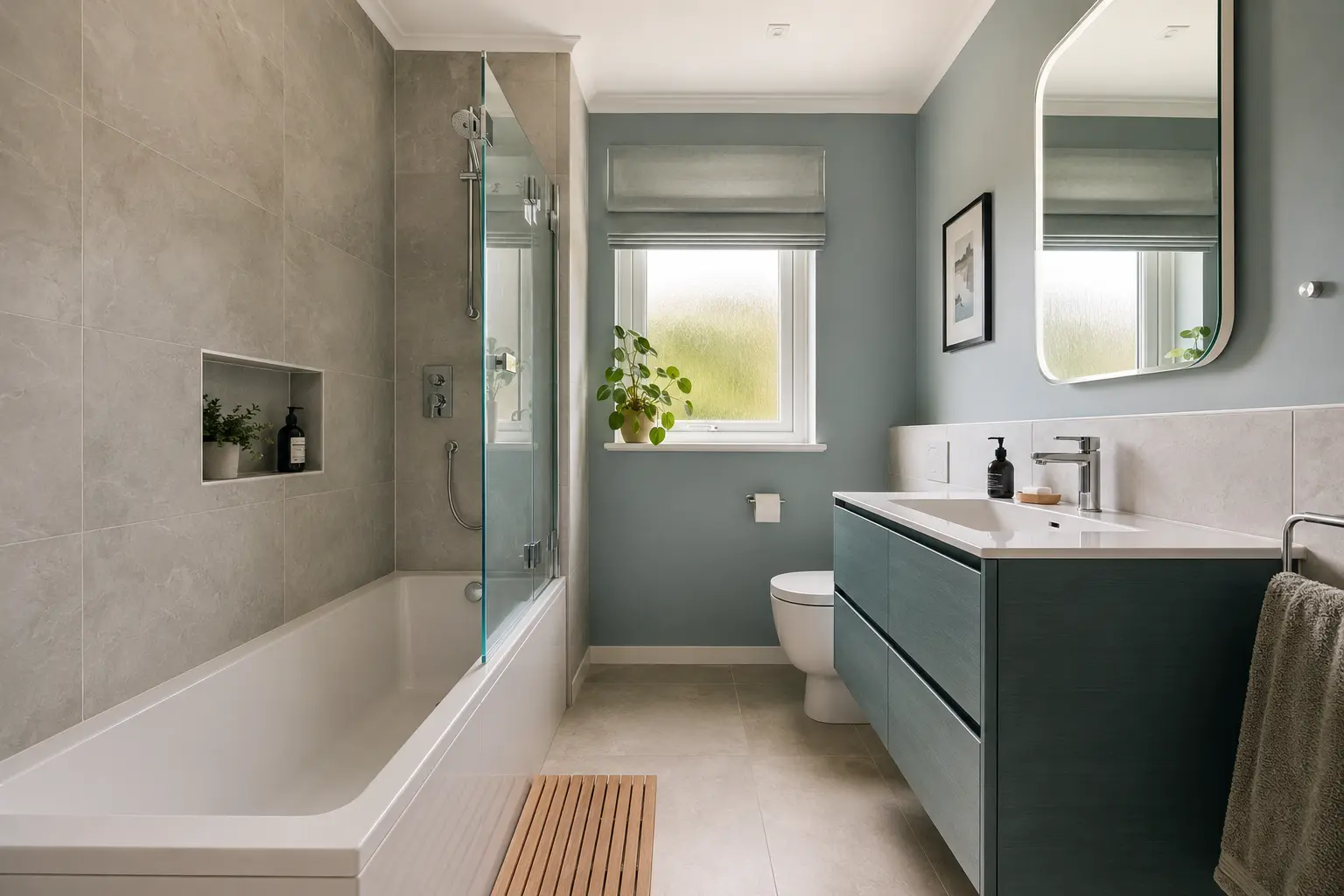
Notice when the damp appears
Write down whether the problem is worst after showers, overnight or during wet weather. Note whether the whole window steams up or one small area stays damp. These observations can help the person checking the room, but they do not identify the cause on their own. A leak and condensation can both leave visible marks.
Take a photograph before cleaning or decorating over a recurring patch. Record the date and whether the bathroom had just been used. If a surface is soft, loose or visibly damaged, mention that when arranging help. Do not remove panels or disturb hidden materials yourself simply to look for the source.
Check the household routine around ventilation
Ask whether everyone knows how the fan is controlled. A timer may continue after the light goes out, while another fan may use a separate switch. Find the instructions for the actual model rather than guessing from the noise. If the fan has stopped or behaves differently from usual, arrange a check.
Keep towels spread so they can dry and avoid piling damp washing in the bathroom. Wipe away heavy water where practical after use. These habits support a working ventilation system, but they do not replace repair of a leak or a faulty fan. Persistent damp still needs its cause checked.
Explain recurring problems during a renovation survey
If you are planning a new bathroom, show the fitter where mould or water marks keep returning. Explain what you have already tried and whether any fan or plumbing repairs have been done. A new panel or coat of paint should not be treated as the answer to an unidentified moisture problem.
Ask how the proposed work addresses the cause. That may involve investigating a leak, checking extraction or preparing damaged surfaces before new finishes are fitted. The quote should make clear which checks and repairs are included. If specialist advice is needed, deal with that before choosing a finish to cover the affected area.
Use cleaning products as instructed
Follow the product label and the surface manufacturer’s care instructions. Do not mix cleaning products, and keep children and pets away from the work. If you are unsure whether a cleaner is suitable for a panel, tile or seal, ask the manufacturer rather than trying a stronger chemical.
Cleaning may remove a visible mark without solving the reason it returns. If mould covers a larger area, keeps coming back or appears with damaged building materials, seek suitable professional advice. Describe what you can see and how the room is used. You do not need to diagnose the building before asking for help.
After repairs, keep an eye on the same areas through normal bathing use. Note whether they dry and whether the fan works as expected. This gives you a practical record to share if the problem continues, instead of repeatedly repainting the surface and losing track of when the damp returned.
If you rent the property, report recurring damp to the person responsible for repairs and keep a record of the report. Do not treat repeated cleaning as a substitute for investigating the source. A clear description and dated photographs can help explain what keeps happening.
Sources and further reading
Checked 11 October 2026. These resources give further information.