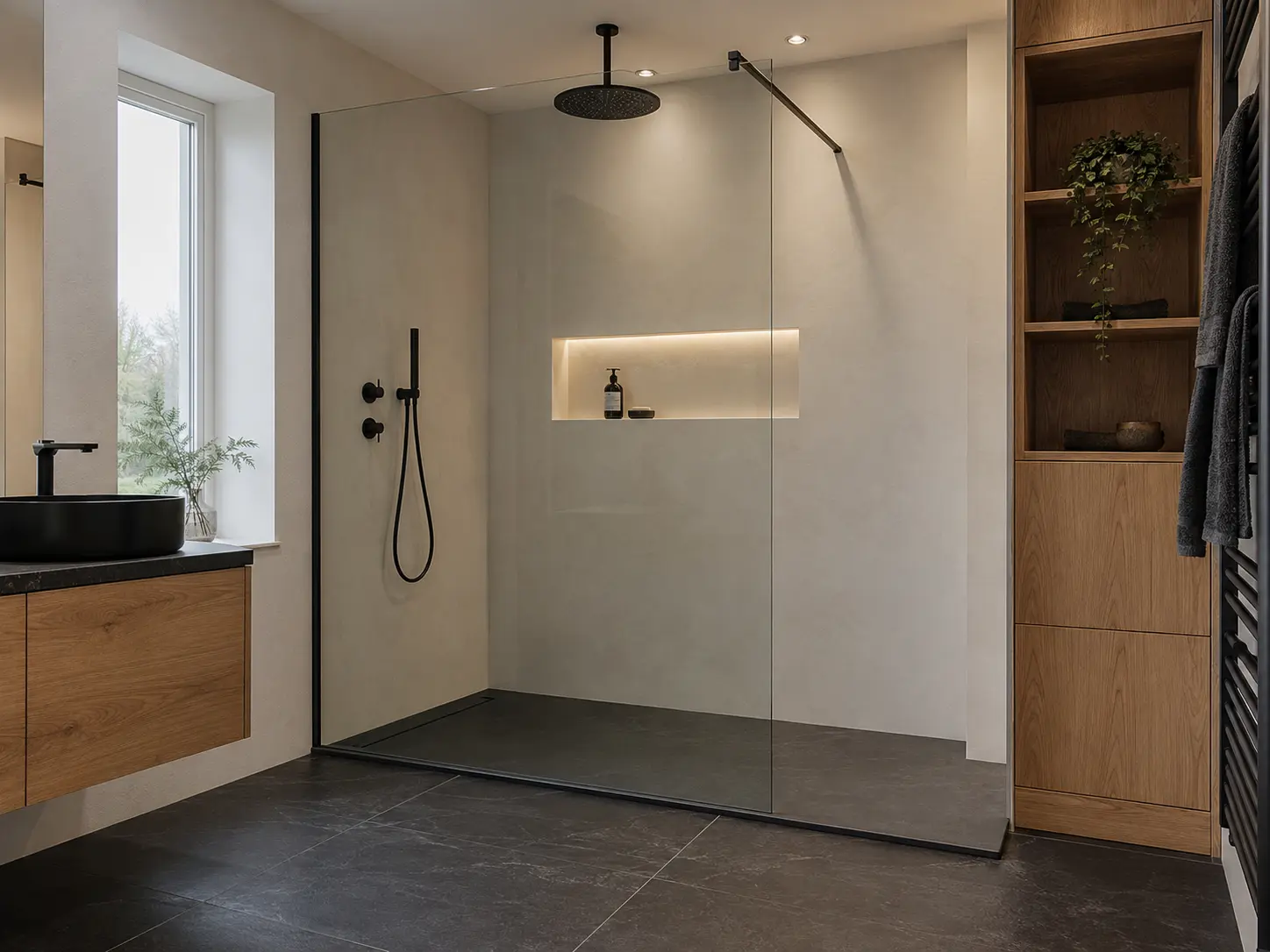
Check the existing system first
Tell your installer what type of shower and hot-water system you have. Product selection should take account of available flow, pressure and the manufacturer’s requirements. An attractive fitting is only useful if it works properly in your home.
Ask the supplier for the rated flow or water use figures and the conditions behind them. Comparing products on the same basis is more helpful than relying on a vague eco label.
To discuss changes to your own bathroom, read about bathroom design and installation in Cumbernauld.
Choose a shower head that is compatible
Energy Saving Trust explains how suitable water-efficient shower heads can reduce water use. Check compatibility with your shower, especially if it is electric. Follow your shower manufacturer’s guidance before replacing a head or adding a flow restrictor.
A new shower needs protection against used water flowing back into the clean supply. Water Regs UK explains why the hose position matters. Have the installer assess this rather than changing plumbing arrangements yourself.
Discuss Your Bathroom Plans
Tell us your postcode and what you want to change.
Call 07700 175069 Send an enquiry →Look at taps and toilets as part of the whole room
When selecting basin taps, ask about flow control and whether suitable aerators are included. Choose a toilet and flush arrangement that meet your needs, then make sure the controls are easy to use.
A fitting that is difficult to operate or awkward to clean may be a poor choice even if its stated water use looks attractive. Discuss the household’s everyday needs alongside product details.
Usage and leaks matter too
Shorter showers and switching off the tap while brushing teeth can reduce water use without a bathroom refit. A dripping tap or toilet that keeps running should be investigated rather than treated as normal.
Actual savings depend on the old fitting, the new product and how it is used. We do not promise a fixed bill reduction from a particular bathroom design.
Write down your chosen water-saving fittings
If efficient water use is a priority, say so at the design stage. Ask for compatible shower, tap and toilet choices to be recorded in the proposal, together with any changes the existing system needs.
For your Cumbernauld bathroom, send an enquiry describing the room and what you want to improve. We can discuss design, supply and installation around those priorities.
Compare water figures for the same use
A shower flow figure describes how much water passes through in a stated time, usually litres per minute. It is not a promise about your household bill. Ask what water pressure the figure assumes and whether it describes the complete shower or only one component. Keep those details with the product name when comparing alternatives.
For a toilet, look at the water used by each flush setting and how the buttons work. Someone who cannot easily tell the buttons apart may use the larger flush every time. The controls need to be clear and comfortable, as well as matching the rest of the bathroom. Ask to see the product information rather than choosing from a general water-saving label.
Make everyday use part of the decision
Think about rinsing shampoo, washing children and cleaning the shower screen. A hand shower may help with these tasks, but the chosen combination of valve, hose and head needs to suit the water supply. Explain how you use the bathroom so the installer can check the complete set of fittings.
If two showers or taps may run at once, mention this before ordering. Do not judge a replacement only by how it works when everything else is switched off. The installer can check the existing supply and discuss whether the products you want are suitable. This avoids buying fittings first and discovering later that other work is needed.
Keep water-saving fittings working properly
Keep the cleaning instructions for taps and shower heads. Deposits or blocked outlets can change the spray and make a shower unpleasant to use. Clean only as the manufacturer recommends; adding an unfamiliar attachment or soaking a part in a strong cleaner can cause damage.
If water keeps running into the toilet pan after flushing, report it with a description of when it happens. A photograph or short video may help the person arranging a visit, but do not dismantle a concealed cistern simply to identify the fault. Know where its access panel is and keep that panel reachable.
After installation, ask how the shower settings and toilet buttons should be used. Keep the model details somewhere easy to find, so replacement parts can be matched correctly. A well-chosen fitting is easier to maintain when the household knows how it works and where to get the right instructions.
For a household bathroom, choose controls that each regular user can understand. Clear markings on a toilet flush or shower control help the chosen fittings work as intended. Ask for a demonstration and keep the instructions, particularly if the new controls differ from the ones you have used before.
Sources and further reading
Checked 11 October 2026. These resources give further information.